

Every year at the Tokyo International Film Festival, the programming team makes an effort to champion emerging talent that challenges preconceived notions of what Japanese cinema is or can be. Through their Women’s Empowerment and Nippon Cinema Now strands, the festival often showcases new work from female and non-binary filmmakers who bring their unique worldview to the big screen. At the 2025 edition of the festival, three of the most exciting filmmakers showing their work were Mika Imai (Kiiroiko), Chihiro Amano (Sato and Sato) and Keiko Tsuruoka (Saikai Paradise) whose films confront notions of love, family, belonging and home. Amid the rush of the festival, we caught up with these three trailblazing filmmakers to find out what informs their creative practice.
Keiko Tsuruoka
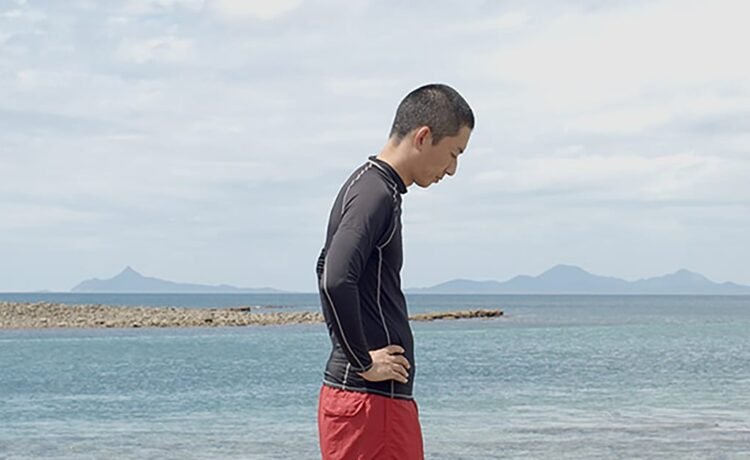
In Tsuruoka’s tender drama Sakai Paradise, a young man returns to his idyllic rural hometown, reconnecting with his family and old friends, while also struggling to be honest with them about his true self.
Get more Little White Lies
LWLies: Could you start by telling me how you became interested in filmmaking, and then how you were able to get your start in the film industry?
Tsuruoka: It all started when I was still in elementary school. I started getting really into watching movies, and I really liked to watch things that were moving. I used to tell my family that I wanted to become a filmmaker and a director. It was lucky because my family thought that was interesting and they supported me. I always had this admiration for filmmaking, and then I started studying film in college. I started making films then, and then I went on to graduate school. After graduate school, I made my theatrical debut.
You teach at university now, right?
Yes, at a small university in Kobe.
The film industry across the world is still heavily dominated by men – it’s getting better but it is still difficult. Have you found as a teacher that more women are interested filmmaking?
Yes, there are more [female] people interested in filmmaking. Here in Japan, the female directors, young newcomers, are probably more active and full of energy than the male directors at that age. These are people in their 20s. Unfortunately, as they move on to their 30s and 40s and they become more mature as a director, they don’t have the chance of working with a big budget film.
I was speaking to a filmmaker yesterday and she said when she had her baby, suddenly no one wanted to hire her to direct films anymore.
Yes, that is very common. Unfortunately, our life plan as a human being and our career plan doesn’t really coincide; they run parallel with each other. We often have to choose one or the other.
Yes, I suppose we see that in Saikai Paradise: the plan is not necessarily how life turns out. I am curious to know what made you choose Saikai as a setting, because, certainly for foreigners, it’s not somewhere that we would have heard of. I’m interested to know what brought you to it, if it’s a place you had a relationship with.
Actually, the actor that plays the main character, Yanagitani Kazunari, is from Saikai. He came to me and asked if I would make a movie in his hometown. It all started from there.
So even the idea for the film was a collaboration between the two of you?
Yes, interestingly enough, we discussed it and he mentioned about his family, explained what his experiences were like, coming out to Tokyo with his family. The family portrayed in the movie is his actual family; his mother actually runs the tofu place and the father is the same; they are all the actual parents.
They are very good actors! The film is very quiet and very focused on the difficulties that we have sharing things with the people closest to us. We see it with the family but with his friends as well. How did that element of the unspoken influence your writing? It’s tricky to get across something that someone is unable to say in a script.
The unspoken, the things that people cannot tell, even though they want to tell: these are things that I was most interested in from the beginning. That was the starting line for me on to this project. But I must add, the more you go to a rural area, that becomes stronger. You’re out in the city and you go back to your hometown and there are things that you want to say, but you can’t say. For example, in this case, he had a fiancé but his marriage didn’t come through, and he knows how much the family has been looking forward to it. He probably introduced her to his friends, who were looking forward to it. But he has to share the sad news that he’s not [getting married]. I didn’t want to make it into a big drama, but I really wanted to portray his dilemma, wanting to tell them but he can’t.