

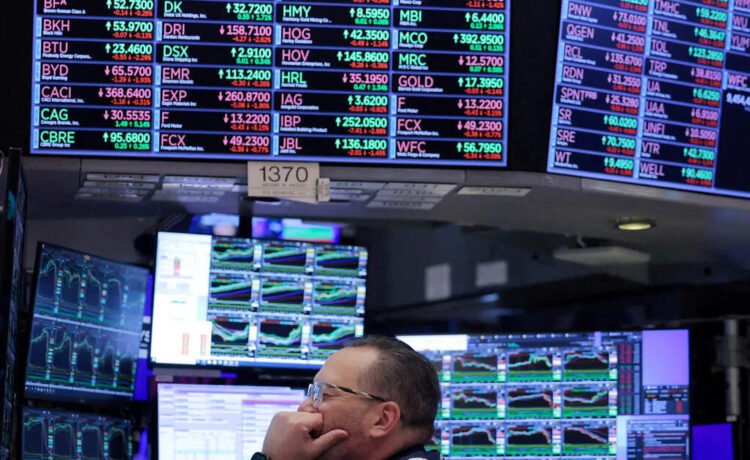
Why US stock markets crashed today, and Nasdaq, S&P 500 and Dow Jones in red now?
US stocks closed lower as investors reacted to slowing AI growth concerns, rising oil prices, and uncertainty before major tech earnings. A report about OpenAI missing internal targets raised doubts about future AI spending. At the same time, higher crude prices increased inflation fears. Investors also waited for policy signals from the Federal Reserve, which added caution and pushed markets into negative territory.
Why US stock markets crashed today?
The decline was driven by a mix of technology sector weakness and global economic concerns. Semiconductor companies such as Nvidia and other chip stocks fell as traders booked profits ahead of earnings. War tensions and rising oil prices also revived fears about inflation and interest rates. Investors reduced exposure to risk assets while waiting for earnings and central bank guidance.
Nasdaq, S&P 500 and Dow Jones in red now?
All three major indexes ended the session lower as technology shares led losses and energy-driven inflation worries affected sentiment. The Nasdaq dropped the most because of its heavy exposure to tech and chip companies. The S&P 500 and Dow Jones also slipped as investors moved to safer positions before major earnings releases and the Federal Reserve meeting.
Market reaction to AI sector concerns
Technology shares led the decline. Semiconductor stocks had risen strongly earlier this year. Investors started taking profits before major earnings releases. A report from the Wall Street Journal said OpenAI missed internal targets for weekly users and revenue. This raised questions about spending on data centers and AI infrastructure.

Shares of Oracle fell due to its links with OpenAI. Chip companies also declined. Shares of Nvidia, AMD and Broadcom dropped. CoreWeave also fell. Chuck Carlson of Horizon Investment Services said investors questioned whether AI growth could slow and affect spending. Major tech earnings expected this week increased caution.
Market drivers explained
Five large technology companies were preparing to report earnings. Alphabet, Amazon, Meta Platforms and Microsoft planned to release results. Apple was set to report the next day. These companies represent about 44% of the S&P 500 market value, according to Raymond James. Investors reduced positions before the earnings announcements.
Company earnings move individual stocks
Some companies moved against the market trend. General Motors shares rose after beating profit estimates and raising full-year guidance. Strong car demand supported results. United Parcel Service shares fell after fuel costs offset business gains. The company maintained its full-year revenue target. Coca-Cola shares increased after raising its annual earnings outlook and reporting strong results. Visa and Starbucks were also preparing to report earnings.
War, oil prices and Federal Reserve signals
Investors also watched the policy meeting of the Federal Reserve. This meeting was expected to be the last led by chair Jerome Powell. The central bank was expected to keep interest rates unchanged. However, investors focused on comments about inflation and energy prices.
Oliver Pursche of Wealthspire Advisors said high oil prices could lead to long-term inflation and possible rate increases. War tensions and diplomacy also affected markets. Donald Trump expressed dissatisfaction with a peace proposal from Iran. This reduced optimism about conflict resolution.
Global oil developments increase risk
Crude oil prices rose sharply. Higher oil prices raised inflation concerns and pushed investors toward safer assets. The United Arab Emirates announced it would leave OPEC. This decision added uncertainty to global oil supply expectations. Higher energy prices increased concerns about long-term inflation. Investors feared that inflation could remain high and force tighter monetary policy.
Market closing numbers
According to preliminary data:
- S&P 500 fell 34.81 points to 7,139.10
- Nasdaq Composite fell 222.37 points to 24,664.73
- Dow Jones Industrial Average fell 20.44 points to 49,147.35
Technology shares led the decline while some consumer and industrial stocks showed mixed results.
Analysts insights and market outlook
Analysts said the market decline reflected caution rather than panic. Investors were waiting for earnings and Federal Reserve guidance. The coming days will include major tech earnings, inflation signals, and oil price developments. These factors may decide short-term market direction
Investors are watching whether AI spending remains strong and whether inflation pressures increase.
What should investors do now?
Experts suggest investors monitor earnings results and central bank signals. Diversification and long-term planning remain important. Short-term volatility may continue due to global events and policy changes.
FAQs
Q1. Why are technology stocks important for US markets?
Technology companies represent a large share of the S&P 500. Their earnings influence investor sentiment, index performance, and future growth expectations. Any change in outlook can move the entire market quickly.
Q2. How do oil prices affect stock markets?
Rising oil prices increase transport and production costs. This can raise inflation and reduce profits. Higher inflation may lead to interest rate increases, which can reduce stock market valuations.