

Perhaps I’m just a worrywart, but in the hypothetical event I decided to raise a chimpanzee as a member of my family, I would be inclined to put some measures into place in case of an emergency. Even the friendliest pet dog can unexpectedly turn on its master – imagine what a primate weighing around 40 kilos in possession of a 1,300 PSI bite force and opposable thumbs might be able to do in a bad mood. Not having any provisional plan for a chimp attack when there is a chimp regularly toddling around your home is gross negligence.
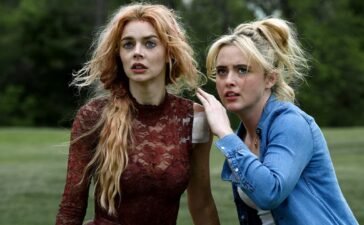
Anyway, meet the Pinborough family, who live in a swanky glass house overlooking the Hawai’ian coast. There’s patriarch Adam (Troy Kotsur), a successful author of crime novels who happens to be deaf, his teenage daughters Lucy (Johnny Sequoyah) and Erin (Gia Hunter), and Ben, who is a chimpanzee. Ben was brought to live with the Pinboroughs by Lucy and Erin’s mother, a linguistics professor who passed away from cancer in the recent past. This grief, compounded by the physical and metaphorical distance created by Lucy leaving for college, has driven a wedge between the sisters – when Lucy returns for the summer alongside BFF Kate (Victoria Wyan) and frenemy Hannah (Jessica Alexander) she receives something of a frosty reception from Erin while her dad’s already on his way out of the door for a work trip.
Get more Little White Lies
At least Ben is pleased to see her. The chimp communicates with the Pinboroughs through signs and the picture-to-speech software on his tablet, though this doesn’t really matter, because, as the film’s opening title card sporting the dictionary definition of rabies has already indicated, Ben’s not long for this world. He’s contracted the disease from a mongoose bite (incidentally Hawai’i is the only US state to be officially declared rabies-free, a distinction it has held since 2000) and – despite the disease’s incubation period typically ranging from 3 to 6 weeks – within a matter of hours he’s displaying all the rabies hallmarks. Foaming at the mouth, hydrophobia and extreme aggression – this does not bode well for the oblivious teenagers in the house.
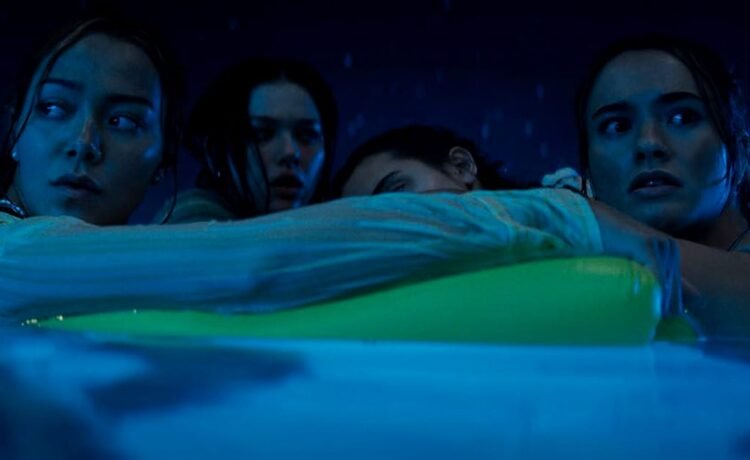
To their credit, writer/director Johannes Roberts and co-writer Ernest Riera set out their stall very early on, with chirpy comedian Rob Delaney cameoing as a veterinarian who is the first victim in Ben’s rabies rampage. If you’ve ever wondered what a face being peeled from a skull or a scalping via ponytail looks like, Primate’s gory set pieces have the answer, and the choice to cast Miguel Torres Umba as Ben rather than rely on a soulless CGI ape is definitely for the better. But watching Primate and revelling in these practical effects, there’s a sense that this film should be much better than it actually is. A horror film about the brazen folly of attempting to domesticate a chimpanzee, or even about the terrifying reality of rabies (which is almost always fatal once a patient is symptomatic) should work. Unfortunately Primate has little interest in its own subject matter – technical plot holes and interchangeable characters aside, there’s no consideration given to Ben’s role within the Pinborough family, let alone the macabre history of domestic chimp attacks in America. Considering Jordan Peele was able to thread the needle of chimpsploitation within a small subplot of his masterpiece Nope, it feels all the more baffling Roberts can’t spin a yarn even half as interesting with an entire 90-minute runtime to play with. Instead we’re left to float around like five teenagers hiding from a killer chimp in an infinity pool, bemused by Primate’s lack of both scientific comprehension and cinematic ambition.